
Chapter One
The Awe
Your microbiome is an organ. And it might be the most interesting one you have.
Part One
The organ you didn't know you had
Most of us learned that bacteria in the gut are either helpful or harmful. Mostly harmful. Something to be sanitized away.
That framing is a hundred years old, and the science has moved on.
The microbiome isn't just a collection of bugs. It's an ecosystem. Like a coral reef. Like a rainforest. Dense. Interdependent. Doing work no single member could do alone.
It also doesn't stay in the gut. Its molecular output enters your bloodstream, shapes how tightly your blood-brain barrier seals [→ Braniste 2014], educates your immune cells, signals your hormones. You evolved with this organ. Your body grew up expecting the signals it makes.
The part no one taught you
The part most people are never told: the richest, most complete sample of this ecosystem is the one you flush away every morning.
Stool isn't waste. It's the harvest.
It's the living output of the most sophisticated fermentation system on Earth, hundreds of species and thousands of molecules, most of them still doing their work. We were trained to feel disgust. The biology asks for something closer to awe. That shift, from waste to resource, from ick to medicine, is the whole reason this story is worth telling.
Humans and bacteria have been intertwined since life began. A long-form essay on co-evolution and the missing links.
Part Two
The population of an ecosystem
Before we get to what it does, it's worth feeling the scale of it, and meeting a little of the cast.
More microbial cells than you have human ones. In your own body, you are outnumbered. [→ Sender 2016]
Lighter than a can of soup, yet it runs signals to nearly every organ you have. [→ Sender 2016]
Each of us carries at least 160; together we carry more than a thousand, and we still haven't named them all. [→ Qin 2010]
So who actually lives in there?
We've named and studied only a fraction of them, and it isn't only bacteria. Archaea, fungi, and viruses live here too. Most of those viruses are bacteriophages, phages that prey on the bacteria themselves, and a single reference catalogue built from nearly 2,000 people holds more than 33,000 distinct viral populations [→ Gregory 2020]. Here are a few of the residents we've come to know, and what they do:
Versatile fiber and complex-carbohydrate degraders that also help school the immune system. [→ Wexler 2007]
Plant-fiber specialists: abundant in high-fiber, plant-rich diets, and linked to better glucose handling after fiber-rich meals. [→ Kovatcheva-Datchary 2015]
Butyrate producers that support the gut barrier and keep things moving. [→ Tamanai-Shacoori 2017]
One of the gut's major butyrate producers from dietary fiber. [→ Louis & Flint 2009]
Break down resistant starch and tough fibers most microbes can't touch; R. bromii is a keystone for resistant starch. [→ Ze 2012]
Lactic-acid bacteria: the name on most yogurt and probiotic labels, and a small resident population in the human gut. [→ Walter 2008]
Carbohydrate fermenters associated with a balanced, resilient gut. [→ Liu 2021]
The most heritable gut taxon in a 416-twin-pair study, and enriched in people with lower body mass. [→ Goodrich 2014]
Butyrate producers that tracked with higher quality-of-life scores in two population cohorts. [→ Valles-Colomer 2019]
Not a bacterium but an archaeon: it clears the hydrogen gas that fermentation leaves behind. [→ Samuel & Gordon 2006]
Mostly harmless residents, the dominant aerobe of the gut; only a few strains cause trouble. [→ Tenaillon 2010]
Bile-loving microbes: part of the normal cast, but can bloom and turn pro-inflammatory when diet shifts the bile acids. [→ Devkota 2012]
And this is the short list. Hundreds more have been sequenced but barely characterized, and researchers are still finding species that have never been described. Nobody has the full roster yet.
Gas biology: how sulfide is made in the colon and what it does there. SIBO appears in the title; the post is about the chemistry of a gas, not about a condition ThaenaBiotic is studied for.
The names you already know
Some species do outsized work relative to their neighbors. Ecologists call them keystone species. Think of the gray wolves returned to Yellowstone, where a single species reshaped the elk, the plants, even the course of the rivers. A few of the gut's keystones have become household names, on probiotic labels and health podcasts. What each one does:
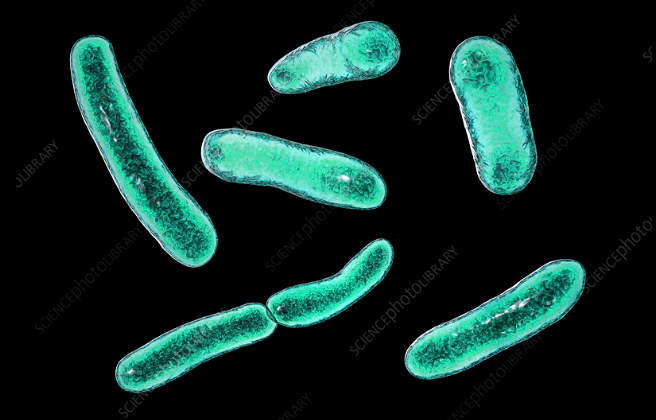
Butyrate producer. One of the most abundant species in healthy guts, and one of the first to go when the gut is inflamed or metabolically stressed. Its short-chain fatty acids feed your gut wall and dial down inflammation. [→ Sokol 2008]
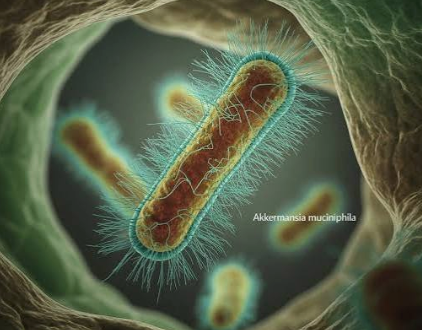
Gut lining guardian. Lives in and repairs the mucus layer that lines your intestine. Depletion is associated with a more permeable gut lining, metabolic stress, and weaker immune tolerance. [→ Depommier 2019]
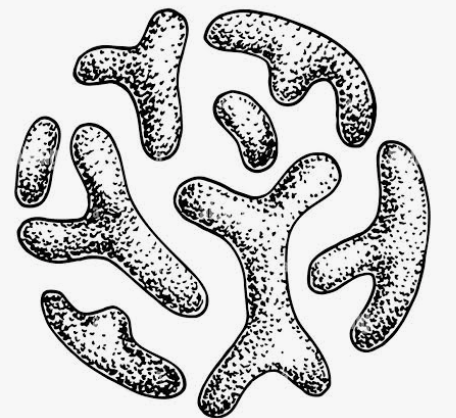
Early-life immune architect. Among the first microbes to colonize an infant gut, where it helps educate the immune system. Depletion early in life is linked to a higher risk of allergic conditions later in childhood. [→ O'Callaghan & van Sinderen 2016]
Notice the first one. Faecalibacterium prausnitzii may be the single most important microbe on this page, and you've almost certainly never seen it for sale. It's too oxygen-sensitive to bottle as a live probiotic [→ Khan 2014]. That's the first hint at something this whole story turns on: the parts that matter most are often the ones you can't buy as a single strain on a shelf.
The reframe
Even the keystones don't work alone.
They depend on the functioning ecosystem around them: the named species, the rare and unnamed ones, all sustaining a shared chemical environment none of them could produce solo. No single hero species carries this. The whole community does, and its diversity is the point.
"Whether it's a coral reef or a forest or a desert, they can all be healthy islands of ecosystems. What needs to be true is biodiversity, resistance and resilience to perturbation."Andrea McBeth, ND | Founder, Thaena
Thirty different plant foods a week: what the studies behind that recommendation found.
Part Three
It runs more of you than you'd believe
The molecules your microbiome makes don't stay in your gut. They reach nearly every system in your body. A sample of what this one organ runs:
Brain & mood
Your gut has a physical connection to your brain: the vagus nerve carries information from your gut and other organs up to your brain. Your gut also makes most of your body's serotonin. [→ Berthoud & Neuhuber 2000][→ Mawe & Hoffman 2013]
Two 2026 papers got specific about how the gut talks to the brain: bacteria building a brain chemical from food, and a bacterial molecule that travels to the brain.
Immune function
The microbiome doesn't sit beside your immune system, it calibrates it, training the regulatory cells that hold inflammation and autoimmunity in check. [→ Vighi 2008][→ Arpaia 2013][→ Smith 2013]
A decade of disagreeing autoimmunity studies, and the 2026 paper that worked out why. A review of published research; ThaenaBiotic has not been studied in autoimmune disease.
Metabolic health
It shapes how you process food and regulate blood sugar. The clearest proof runs in reverse: subtherapeutic antibiotics have been fed to livestock as growth promoters for decades because they drive weight gain, and in children, antibiotic exposure before six months tracks with higher body mass. Disturb the microbiome, and metabolism follows. [→ Hirode & Wong 2020][→ Cho 2012][→ Trasande 2013][→ Bailey 2014]
High protein, intermittent fasting, GLP-1 drugs: three approaches with real evidence, and the gut chemistry that decides what each one does for you.
Hormones
GLP-1 is the signal Ozempic and Wegovy mimic. It isn't a pharmaceutical invention. A healthy gut makes it continuously, alongside signals that shape cortisol, thyroid, estrogen, and appetite. The drug replaces one signal your gut is built to produce. [→ Tolhurst 2012]
GLP-1 medications bring gastrointestinal side effects for many people. What the gut is doing while you take them.
Longevity & aging
It ran the other way, too: an aged microbiome aged young mice faster. Semi-supercentenarians carry a distinctive gut signature: the dominant core families thin out while health-associated groups including Akkermansia, Bifidobacterium and Christensenellaceae become enriched. In mice, the aging gut microbiota drives inflammatory changes in the brain and retina, so 'inflammaging' is at least partly something the gut does, not something that simply happens. [→ Parker 2022][→ Biagi 2016]
Thirty years of follow-up on a hundred thousand people, and what the ones who aged well had in common.
A walk through a recent review of the microbiome as a bustling ecosystem inside each of us, with the companion podcast.
Chapter II
Now: how does an organ in your gut talk to the rest of you?
It speaks in chemistry. More than 10,000 molecular signals, some slow and some millisecond-fast, crossing into your bloodstream and binding receptors in your immune cells, your brain, your endocrine system.
The next page follows the conversation.
References
- 1Human Microbiome Project Consortium. Nature. 2012;486(7402):207–214. PMID 22699609.
- 2Sender R, Fuchs S, Milo R. PLoS Biol. 2016;14(8):e1002533. PMID 27541692.
- 3Vighi G, Marcucci F, Sensi L, Di Cara G, Frati F. Clin Exp Immunol. 2008;153 Suppl 1:3–6. PMID 18721321. (gut-associated lymphoid tissue as roughly 70% of the immune system)
- 4Hirode G, Wong RJ. JAMA. 2020;323(24):2526–2528. PMID 32573660. (metabolic syndrome prevalence in US adults)
- 5Mawe GM, Hoffman JM. Nat Rev Gastroenterol Hepatol. 2013;10(8):473–486. PMID 23797870. (serotonin synthesis in the gut; physiology source for the serotonin line)
- 6Qin J et al. Nature. 2010;464(7285):59–65. PMID 20203603. (1,000 to 1,150 prevalent bacterial species across a 124-person cohort; at least 160 per person)
- 7Goodrich JK et al. Cell. 2014;159(4):789–799. PMID 25417156. (Christensenellaceae the most heritable taxon; enriched at low BMI)
- 8Trasande L et al. Int J Obes (Lond). 2013;37(1):16–23. PMID 22907693; Bailey LC et al. JAMA Pediatr. 2014;168(11):1063–1069. PMID 25265089. (early-life antibiotic exposure and later body mass)
- 9Wexler HM. Clin Microbiol Rev. 2007;20(4):593–621. PMID 17934076. (Bacteroides)
- 10Kovatcheva-Datchary P et al. Cell Metab. 2015;22(6):971–982. PMID 26552345. (Prevotella and glucose metabolism)
- 11Tamanai-Shacoori Z et al. Future Microbiol. 2017;12:157–170. PMID 28139139. (Roseburia)
- 12Louis P, Flint HJ. FEMS Microbiol Lett. 2009;294(1):1–8. PMID 19222573. (butyrate producers incl. Eubacterium rectale)
- 13Ze X et al. ISME J. 2012;6(8):1535–1543. PMID 22343308. (Ruminococcus bromii, keystone for resistant starch)
- 14Walter J. Appl Environ Microbiol. 2008;74(16):4985–4996. PMID 18539818. (lactobacilli in the gut)
- 15Liu X et al. Gut Microbes. 2021;13(1):1–21. PMID 33525961. (Blautia)
- 16Valles-Colomer M et al. Nat Microbiol. 2019;4(4):623–632. PMID 30718848. (Coprococcus, Faecalibacterium and quality of life)
- 17Samuel BS, Gordon JI. Proc Natl Acad Sci U S A. 2006;103(26):10011–10016. PMID 16782812. (Methanobrevibacter smithii)
- 18Tenaillon O et al. Nat Rev Microbiol. 2010;8(3):207–217. PMID 20157339. (commensal E. coli)
- 19Devkota S et al. Nature. 2012;487(7405):104–108. PMID 22722865. (Bilophila and dietary fat, mice)
- 20Sokol H et al. Proc Natl Acad Sci U S A. 2008;105(43):16731–16736. PMID 18936492. (Faecalibacterium prausnitzii anti-inflammatory)
- 21Depommier C et al. Nat Med. 2019;25(7):1096–1103. PMID 31263284. (pasteurized Akkermansia, human trial)
- 22O’Callaghan A, van Sinderen D. Front Microbiol. 2016;7:925. PMID 27379055. (Bifidobacteria)
- 23Smith PM et al. Science. 2013;341(6145):569–573. PMID 23828891. (SCFAs regulate colonic Treg cells)
- 24Tolhurst G et al. Diabetes. 2012;61(2):364–371. PMID 22190648. (SCFAs trigger GLP-1 via FFAR2/FFAR3, mice)
- 25Parker A et al. Microbiome. 2022;10(1):68. PMID 35501923. (young-to-aged microbiota transfer reverses aging hallmarks in mice)
- 26Biagi E et al. Curr Biol. 2016;26(11):1480–1485. PMID 27185560. (gut microbiota and extreme longevity)
- 27Berthoud HR, Neuhuber WL. Auton Neurosci. 2000;85(1-3):1–17. PMID 11189015. (vagal afferents)
- 28Cho I et al. Nature. 2012;488(7413):621–626. PMID 22914093. (subtherapeutic antibiotics and adiposity, mice)
- 29Arpaia N et al. Nature. 2013;504(7480):451–455. PMID 24226773. (microbial metabolites promote regulatory T cells)
- 30Braniste V et al. Sci Transl Med. 2014;6(263):263ra158. PMID 25411471. (microbiota and blood-brain barrier permeability, mice)
- 31Gregory AC et al. Cell Host Microbe. 2020;28(5):724–740. PMID 32841606. (Gut Virome Database)
- 32Khan MT et al. PLoS One. 2014;9(5):e96097. PMID 24798051. (oxygen sensitivity of F. prausnitzii)
These statements have not been evaluated by the Food and Drug Administration. This product is not intended to diagnose, treat, cure, or prevent any disease. ThaenaBiotic® is a dietary supplement. The research summarized on these pages describes the science behind our approach; it does not describe what ThaenaBiotic does for any person or condition.