
Part One
What the microbes make matters
Healthy people can have very different communities of gut microbes. The Human Microbiome Project found that those communities still carried similar sets of genes for metabolic work. Different microbes can do many of the same jobs. [→ Human Microbiome Project 2012] That finding is part of why we focus on what microbes make. Our own testing has detected 10,000+ molecular signals in ThaenaBiotic®.
A second baseline, from outside Thaena, points the same way. In 2026 the National Institute of Standards and Technology characterized a reference material made from pooled human stool: one pool from omnivore donors, one from vegetarian donors, drawn from the general population without health screening, with the compounds in it named [→ NIST SP 260-252]. In the ThaenaBiotic material we have analyzed so far, measured across four analytical platforms, 209 of the 461 compounds NIST named were present, including 79 of the 95 in the polar core of stool (amino acids, short-chain fatty acids, sugars, organic acids) and all nine short-chain fatty acids on that list. Of the 36 NIST compounds that are drug metabolites or industrial additives, none appeared in the dataset analyzed. One caveat: this is a comparison of the batches we have characterized, not a test we run on every batch. The chemistry of a healthy human gut is recognizable from person to person, and it was recognizable in the finished product.
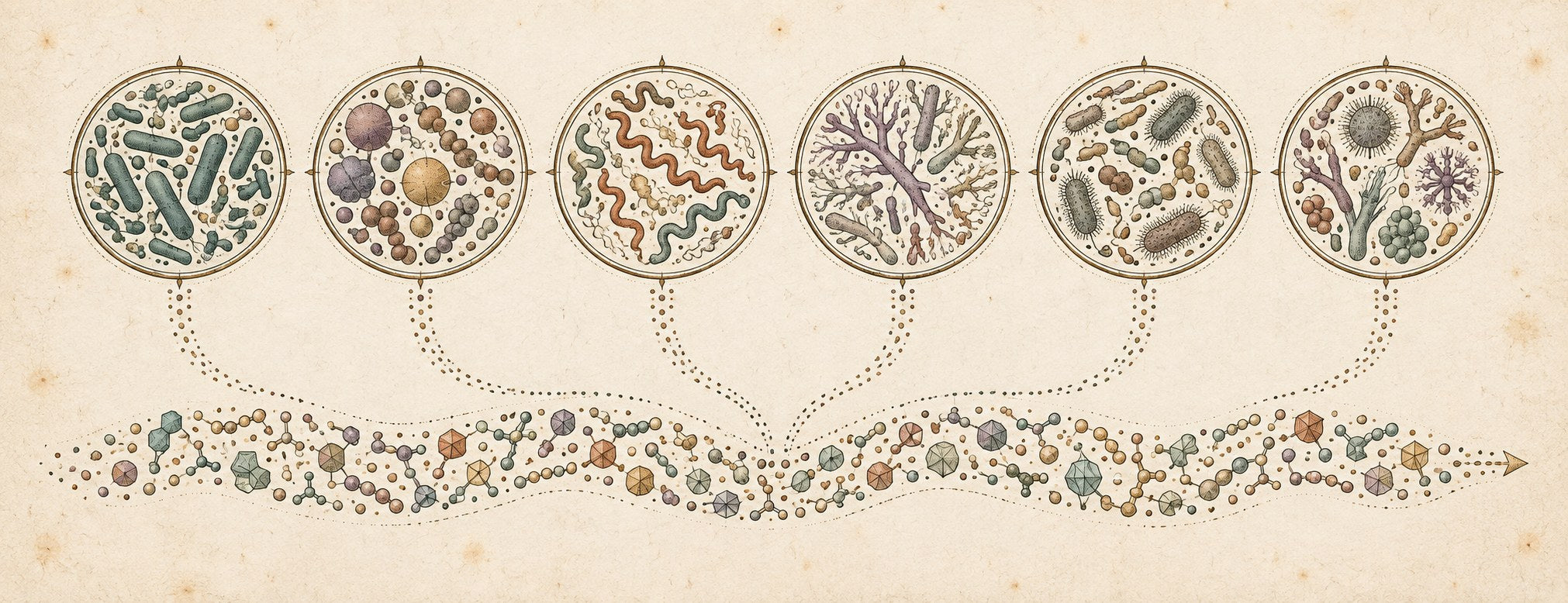
The therapeutic target isn't which bacteria you have. It's the signals a healthy community produces. Those signals are called postbiotics: short-chain fatty acids, bile acids, indoles, polyphenol metabolites, neurotransmitter precursors, and a lot more we're still naming.
"It's not important to know all the kinds. It's important to know that the microbiome is the metabolic organ at the center of all of this, and its output is what keeps every other system calibrated."Andrea McBeth, ND | Founder, Thaena
Probiotics are everywhere, from big-box stores to gas stations. What the three categories mean, and where postbiotics fit.
Part Two
Continuous communication, three speeds
Three words show up a lot from here on: metabolites, postbiotics, and molecules. They all point to the same thing: the compounds the microbiome produces.
Those compounds are signals, and they reach your brain, your immune system, and your hormones. One mechanism, broadcast on three channels, running at three different speeds, all at once.
Fast
neural · millisecondsMedium
immune · hoursSlow
hormonal · hours to daysFast · the neural channel · milliseconds
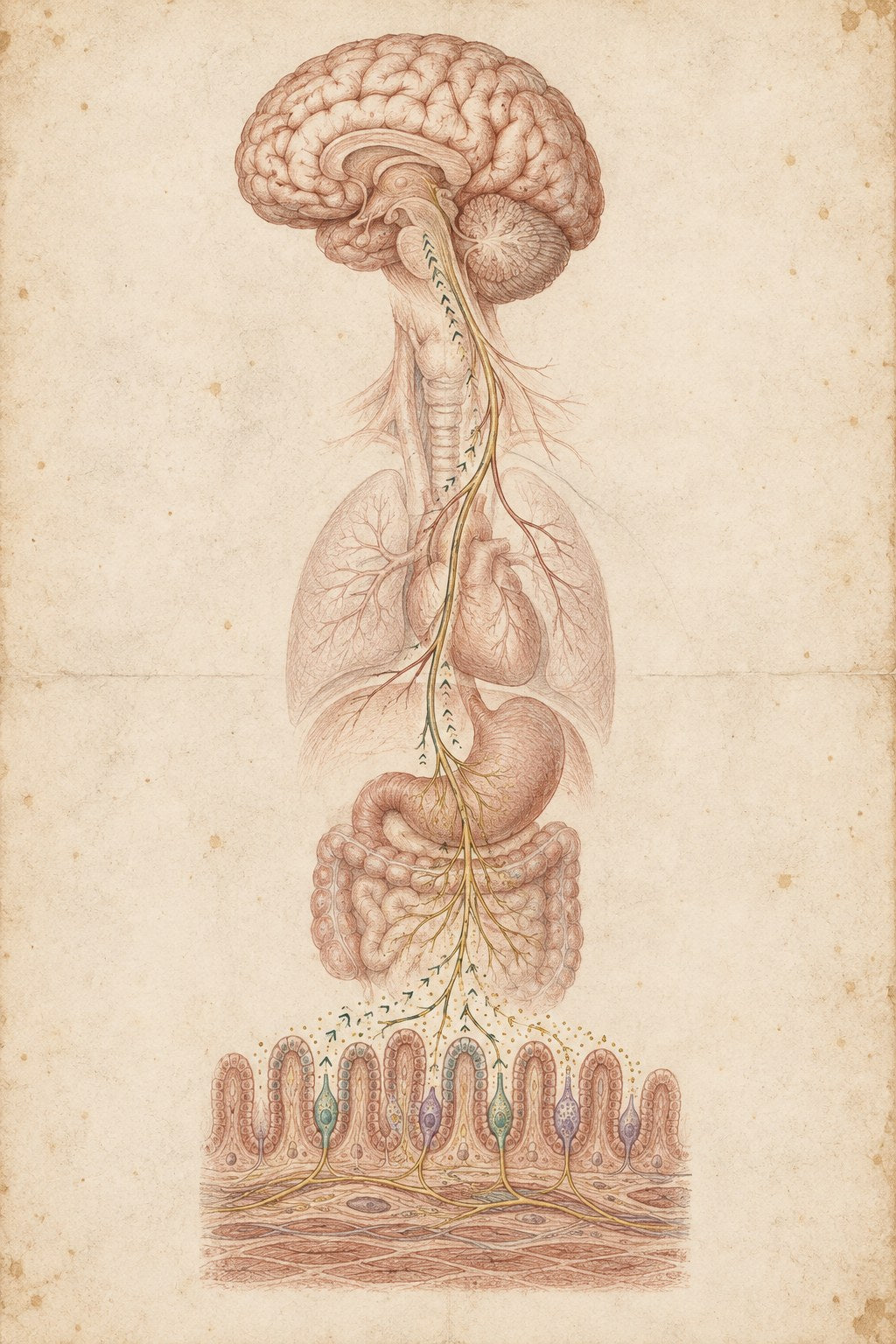
The vagus nerve runs from your brainstem to your abdomen, and most of its traffic moves upward: gut to brain, not brain to gut [→ Berthoud & Neuhuber 2000].
In 2018, researchers found just how fast. Specialized cells in the gut lining, called neuropod cells, form direct synapses with vagal neurons and fire signals to the brain in milliseconds. Your brain can sense what's in your gut almost as quickly as it senses what's on your tongue. [→ Kaelberer 2018]
The microbiome shapes what those signals carry. Most of the body's serotonin is made in the gut, [→ Mawe & Hoffman 2013] and microbial signals help regulate how much. Spore-forming bacteria are one trigger. It doesn't cross the blood-brain barrier directly, but the microbiome sets the substrate that mood pathways are built on: tryptophan metabolism, indoles, vagal signaling.
This gut-to-brain channel is real, and it's an active area of research into how the gut's signals reach the nervous system [→ Xue 2020] and [→ Kang 2017]. The channel is real. See all neurological studies in the Evidence Library →
A 2026 Nature Medicine paper proposed that a stool sample might flag Parkinson's before the first tremor. Why the claim is more fragile than the headline, and what a microbiome test can and cannot do. A review of published work; ThaenaBiotic has not been studied in Parkinson's.
Two 2026 papers pull the gut-Parkinson's question in opposite directions: one says the microbiome can reveal risk early, the other says a single health score cannot. A review of published work; ThaenaBiotic has not been studied in Parkinson's.
Behind the buzz about the gut microbiome sits a newer frontier, postbiotics, and what they may mean for the gut-brain connection.
Medium · the immune channel · hours
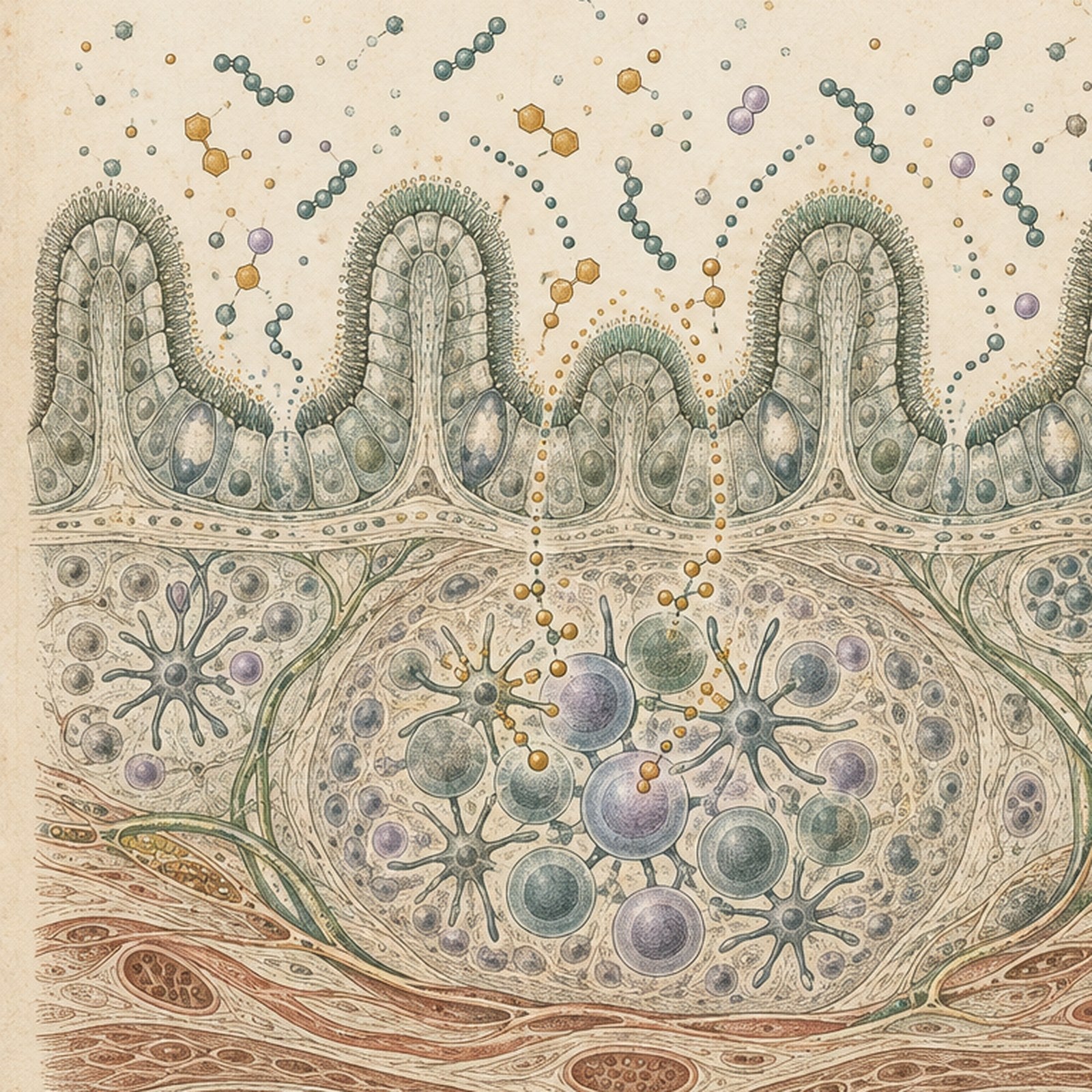
About 70% of your immune system lives in or around the gut. [→ Vighi 2008]
Patches of immune tissue in the small intestinal wall are constantly sampling what the microbiome is making, deciding what to attack, what to tolerate, and how to calibrate [→ Vighi 2008].
Specific postbiotics, especially short-chain fatty acids and secondary bile acids, push the system toward T-regulatory cells, the "stand down" signal that keeps autoimmunity in check [→ Arpaia 2013] [→ Hang 2019]. When those metabolites disappear, the brakes come off.
"The microbiome is our innate immune education system. It is directly interfacing with and educating every component of it."Andrea McBeth, ND
Andrea's years in cancer research, and what the published literature says about the microbiome and immunotherapy response. A reading of research; ThaenaBiotic has not been studied in cancer.
Slow · the hormonal channel · hours to days
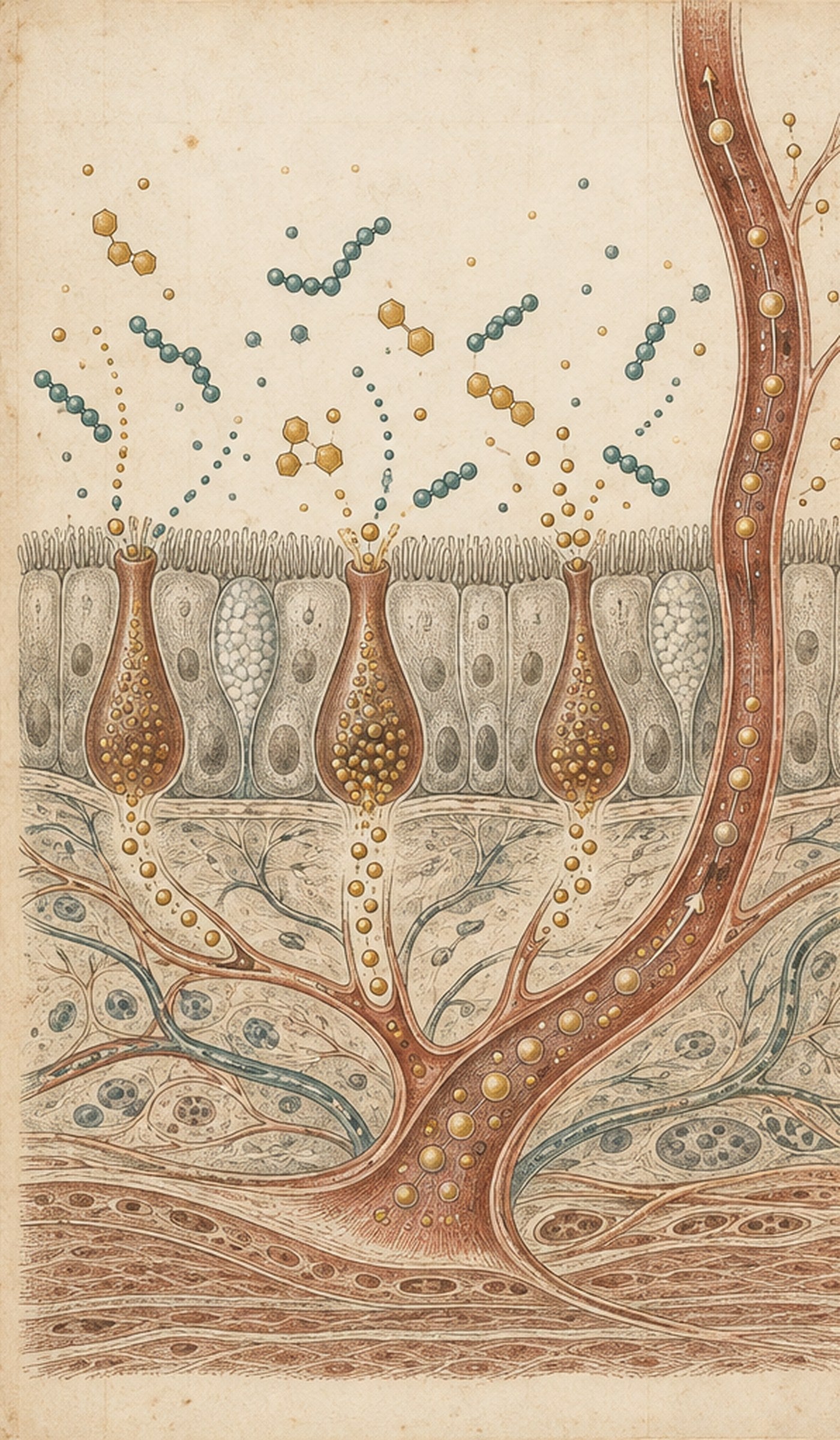
Glucagon-like peptide 1, or GLP-1, is the hormone Ozempic and Wegovy mimic. It reduces appetite, slows gastric emptying, releases insulin, and signals satiety to the brain [→ Drucker 2018]. Your gut has been making it for a very long time.
Short-chain fatty acids made by gut microbes bind to FFAR2 and FFAR3 receptors on hormone-releasing L cells in the gut lining. Tolhurst and colleagues studied this pathway in mice and found that short-chain fatty acids triggered GLP-1 release. Mice missing either receptor released less GLP-1 in response, which helps explain how microbial chemistry can reach the body's hormone system. [→ Tolhurst 2012]
GLP-1 isn't the only hormone the microbiome touches. In germ-free mice, the stress axis that releases cortisol over-responds without a microbiome [→ Sudo 2004]. Gut bacteria recycle estrogen through a set of microbial genes researchers call the "estrobolome" [→ Plottel & Blaser 2011], influence thyroid hormone levels through iodine uptake and recycling [→ Fröhlich & Wahl 2019], and in animal studies track with the appetite hormones ghrelin and leptin [→ Queipo-Ortuño 2013]. GLP-1 just happens to be the one with a pharmaceutical mirror everyone's heard of.
The drug is a workaround for a signal your gut was built to send.
"GLP-1 is part of the enteric nervous system. In a healthy system, the metabolites that turn it on are being made continuously."Andrea McBeth, ND
GLP-1 medications bring gastrointestinal side effects for many people. What the gut is doing while you take them.
When the ecosystem thins out, the signals weaken or stop, on all three channels at once. Every organ that depends on them feels it.
How oxidative dysbiosis depletes the chemical messengers the brain depends on. Written for mental health clinicians and curious minds.
Part Three
The catch: it's all contextual
A microbe isn't a fixed machine that always makes the same thing. What a species does depends on its chemical environment: what it's fed, which neighbors surround it, which metabolites it's swimming in. The very same bug can be a workhorse in your gut and all but idle in mine.
That's why you can't reduce this to a shopping list. Swallowing a single strain doesn't guarantee it behaves the way it would inside a thriving community. Drop one species into a depleted, chaotic gut and it may do little or nothing. The environment writes the job description.
Which points to the real target. The goal isn't to pick and choose the population. It's to restore the diversity of the chemical output, the whole signaling environment a healthy ecosystem produces. That's the reason this story doesn't end with "just take a probiotic."
Gut bacteria reorganize their molecular toolkit depending on who they live next to, which is why a species list tells you less than you would think.
A healthy gut was never a list of the right microbes. It's the chemistry they make together, and that's not something you can assemble one capsule at a time.
Chapter III
That is how the microbiome talks to your body. Now, what modern life did to the conversation.
The microbiome we have now isn't the one we evolved with. Three generations of industrial food, antibiotics, and sterile environments have changed it at the population level. The next page is the data on what we've lost, and why it matters.
References
- 1Human Microbiome Project Consortium. Nature. 2012;486(7402):207–214. PMID 22699609.
- 2Kaelberer MM et al. Science. 2018;361(6408):eaat5236. PMID 30237325.
- 3Yano JM et al. Cell. 2015;161(2):264–276. PMID 25860609.
- 4Tolhurst G et al. Diabetes. 2012;61(2):364–371. PMID 22190648. (mouse and mouse primary-culture study)
- 5Xue LJ et al. Medicine (Baltimore). 2020;99(35):e22035. PMID 32871960. (Parkinson’s + FMT)
- 6Servetas SL, Forry SP, Hunter ME, et al. Characterization of Human Fecal Material (NIST RM 8048) from Omnivore and Vegetarian Donors. NIST Special Publication 260-252, 2026. doi:10.6028/NIST.SP.260-252. Overlap with ThaenaBiotic computed by Thaena 2026-09-06 on InChIKey skeletons across Metabolon, Biocrates, CosmosID and Precion: 209 of 461 named compounds, 79 of 95 NMR polar-core compounds, 0 of 36 pharmaceutical or industrial compounds.
- 7Vighi G et al. Clin Exp Immunol. 2008;153 Suppl 1:3–6. PMID 18721321. (gut-associated lymphoid tissue)
- 8Arpaia N et al. Nature. 2013;504(7480):451–455. PMID 24226773. (microbial metabolites promote regulatory T cells)
- 9Hang S et al. Nature. 2019;576(7785):143–148. PMID 31776512. (bile acid metabolites control TH17 and Treg differentiation)
- 10Drucker DJ. Cell Metab. 2018;27(4):740–756. PMID 29617641. (GLP-1 mechanisms of action)
- 11Kang DW et al. Microbiome. 2017;5(1):10. PMID 28122648. (ASD + FMT, open-label)
These statements have not been evaluated by the Food and Drug Administration. This product is not intended to diagnose, treat, cure, or prevent any disease. ThaenaBiotic® is a dietary supplement. The research summarized on these pages describes the science behind our approach; it does not describe what ThaenaBiotic does for any person or condition.